

A Regulatory and Legal Analysis of Uniswap’s DeFi Products and Services
It begins with a simple interface.
No account registration.
No passport upload.
No compliance onboarding form.
Just a black screen, a token selector, and a pink button that says: “Connect.”
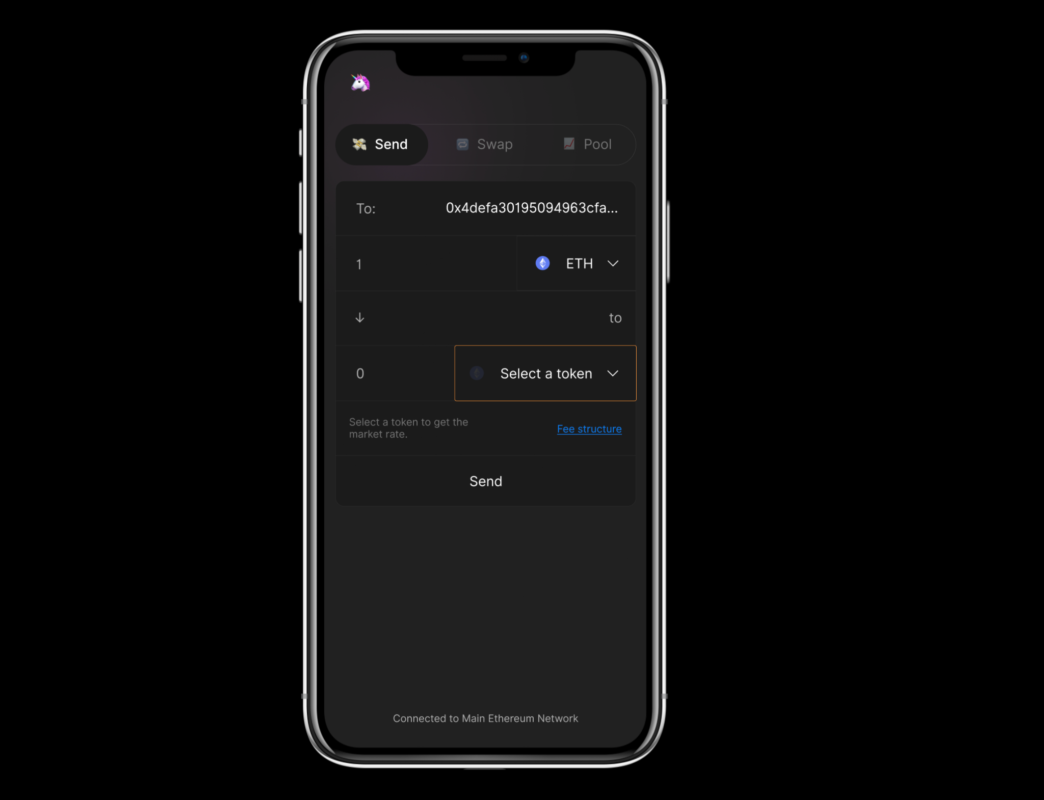
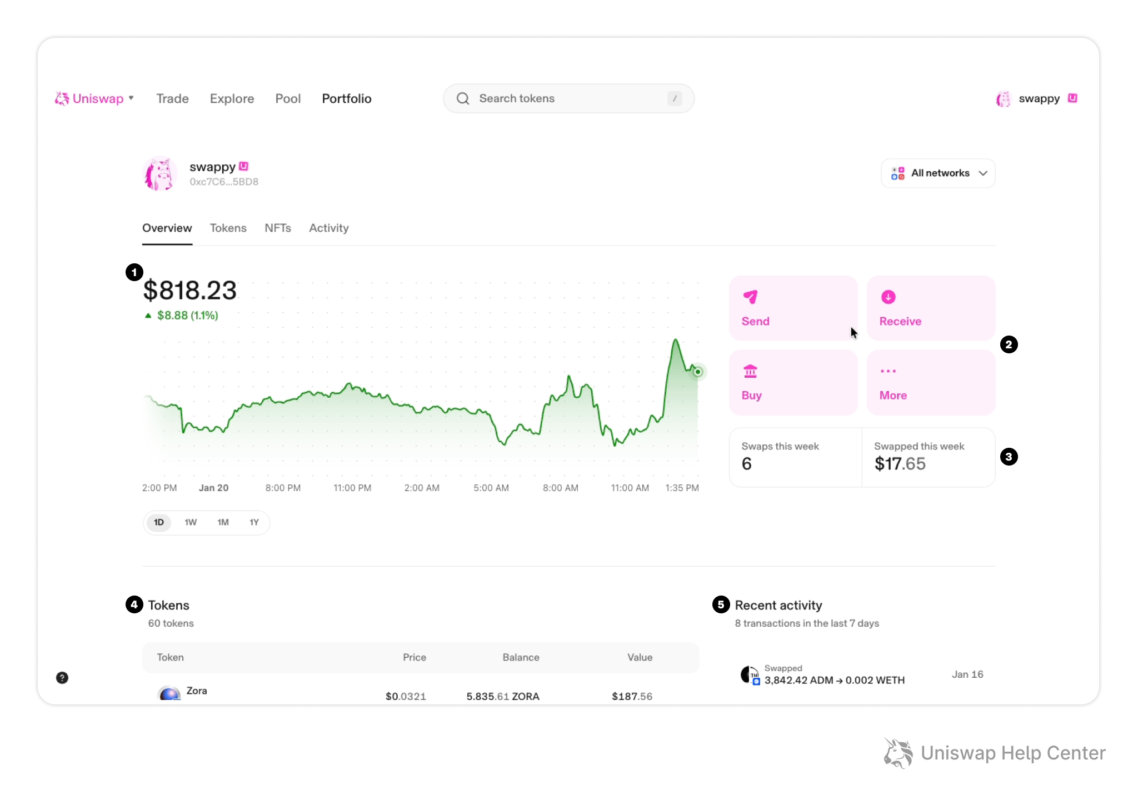
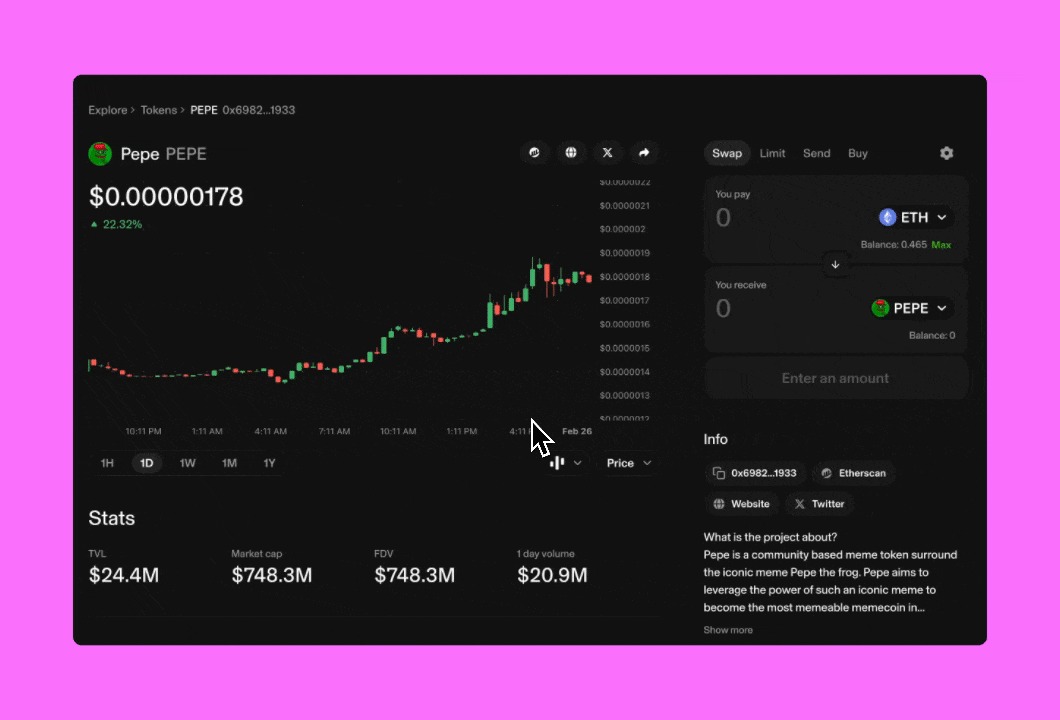
This is Uniswap Labs’s public-facing interface, the gateway to one of the world’s most prominent decentralized exchanges, built on the Uniswap protocol.
It describes itself as decentralized.
Non-custodial.
Permissionless.
Unregulated DeFi.
But now a critical legal question emerges for the UAE market:
Do Uniswap’s DeFi services fall under Article 62 of Federal Decree-Law No. (6) of 2025 issued by the Central Bank of the United Arab Emirates (CBUAE)?
To answer this, we must move beyond slogans, and into statutory interpretation.
Chapter 1: Understanding Article 62 — The Legislative Trigger
Article 62 is not a general crypto provision.
It is a perimeter clause.
It essentially provides that any person who:
- Carries on,
- Offers,
- Issues, or
- Facilitates (directly or indirectly)
Any Licensed Financial Activity is subject to CBUAE licensing and oversight, regardless of the technology used.
And critically:
It explicitly references decentralized finance structures, platforms, protocols, and technological infrastructure.
This is where the analysis begins.
Article 62 does not regulate “blockchain.”
It regulates financial functions delivered through blockchain.
So the question is not:
“Is Uniswap decentralized?”
The real question is:
Does Uniswap carry on, offer, or facilitate Licensed Financial Activities under the Decree-Law?
Chapter 2: What Does Uniswap Actually Do?
To answer the regulatory question, we must analyze functionality, not ideology.
Uniswap provides:
- Token-to-token swaps (via automated market maker smart contracts)
- Liquidity pools (users provide assets and earn fees)
- Token listings and market discovery
- Interface hosting (via app.uniswap.org)
- Governance mechanisms
- Front-end access to smart contracts
- Aggregation functionality (in certain iterations)
It does not:
- Hold user custody (users connect wallets)
- Conduct centralized order matching
- Take deposits in a traditional sense
- Issue fiat currency
But that is not the end of the story.
Because regulatory analysis is not about what a platform does not do.
It is about what economic functions it performs.
Chapter 3: The Definition of “Licensed Financial Activity”
Under the Decree-Law, Licensed Financial Activities include:
- Taking deposits
- Providing credit
- Currency exchange
- Money transfer
- Payment services (including using Virtual Assets)
- Stored value services
- Digital money services
- Retail payment systems
- Arranging or promoting financial activities
So the next step is mapping Uniswap’s features against these categories.
Chapter 4: Is Token Swapping “Currency Exchange”?
At first glance, Uniswap appears to perform something very close to currency exchange.
Users exchange:
ETH → USDC
USDC → DAI
WBTC → ETH
But there is a critical nuance in the Decree-Law:
Virtual Assets are not considered “currency.”
And Article 187 clarifies that:
If virtual assets are used purely for investment or token-to-token swaps, they may fall outside this Decree-Law and into other legislation.
This is significant.
Because Uniswap’s core function is:
Token-to-token exchange between virtual assets.
Not exchange between fiat and virtual assets.
Therefore:
Pure token swapping may not automatically trigger Article 62 under the “currency exchange” limb.
But we must continue.
Chapter 5: The Payment Function Test
Article 187 draws a distinction:
If virtual assets are used as a means of payment or as an instrument of payment, then CBUAE regulations apply.
Now consider this scenario:
A UAE merchant accepts USDC payments routed through Uniswap liquidity pools.
Or:
A payment processor integrates Uniswap smart contracts for settlement.
In such cases, Uniswap infrastructure becomes embedded in payment flows.
However:
Uniswap itself does not directly position its interface as a payment system.
It facilitates asset exchange, not merchant settlement.
The difference is subtle but critical.
So far, Uniswap’s swap function likely aligns with:
Investment and trading use, not payment services.
Chapter 6: Does Liquidity Provision Amount to “Deposit-Taking”?
Liquidity pools introduce a more complex question.
Users deposit tokens into pools.
Other users trade against those pools.
Liquidity providers earn fees.
Is this deposit-taking?
Under traditional banking law, deposit-taking implies:
- Funds accepted from the public
- With obligation to repay
- Often with interest
- On the institution’s balance sheet
Uniswap’s liquidity pools are:
- Smart contract-based
- Algorithmic
- Non-custodial
- Without balance sheet intermediation by Uniswap Labs
Uniswap Labs does not:
- Take custody
- Guarantee repayment
- Control pool funds
Liquidity providers assume smart contract risk and market risk directly.
Thus:
It is difficult to classify liquidity pools as deposit-taking under Article 61.
But another question emerges.
Chapter 7: Is There “Facilitation” Under Article 62?
Article 62 captures those who “facilitate” Licensed Financial Activities, directly or indirectly.
This is where the analysis becomes more delicate.
Even if the protocol itself is autonomous:
Who operates the front-end interface?
Who deploys upgrades?
Who maintains governance?
Who collects fees?
Uniswap Labs develops the protocol.
It operates the interface.
It promotes usage globally.
So the key issue becomes:
Is it facilitating Licensed Financial Activity in the UAE?
If the underlying activity is not a Licensed Financial Activity under the Decree-Law, then facilitation does not trigger licensing.
So everything hinges on classification.
Chapter 8: Trading vs Payment — The Crucial Boundary
Article 187 provides a protective carve-out:
Virtual Assets used for:
- Investment purposes
- Token-to-token exchange
- Swap operations for trading purposes
Are not covered by this Decree-Law.
Uniswap’s core function aligns almost perfectly with this description.
Its homepage states:
“Swap anytime, anywhere.”
It does not say:
“Pay your bills.”
“Send remittances.”
“Store digital money.”
“Offer credit.”
It provides trading infrastructure.
This is a powerful argument that:
Uniswap’s core DeFi services may fall outside Article 62’s scope, if used solely for trading.
Chapter 9: The Operator Exposure Question
But regulatory analysis does not stop at statutory carve-outs.
CBUAE may still evaluate:
- Is there UAE-targeted marketing?
- Is there an offering “in or from” the UAE?
- Are UAE residents being invited to transact?
- Does Uniswap have an operational nexus to the UAE?
If Uniswap Labs has no UAE entity,
No UAE branch,
No UAE marketing campaign,
No UAE-based operators,
Then the territorial nexus weakens significantly.
Article 62 is not extraterritorial in absolute form.
Jurisdiction still matters.
Chapter 10: Governance and Control
Another factor is decentralization maturity.
If governance is sufficiently decentralized:
- No centralized admin control
- No unilateral upgrade power
- No custodial oversight
- Open-source immutable contracts
Then identifying a “person” facilitating activity becomes more difficult.
Regulators regulate persons, not code.
If Uniswap Labs’ role is limited to software development and interface provision, and not financial intermediation, exposure reduces.
But this remains a factual analysis.
Chapter 11: Aggregation and Advanced Features
Uniswap’s interface sometimes includes:
- Aggregation routing
- Token discovery
- Analytics
- Portfolio tracking
These are not, in themselves, Licensed Financial Activities.
But if Uniswap were to integrate:
- Fiat on-ramps
- Direct payment settlement
- Stablecoin merchant rails
- Lending layers
The regulatory outcome could change dramatically.
Currently, the swap function remains within the trading carve-out.
Chapter 12: A Hypothetical Enforcement Scenario
Let us imagine:
A UAE-based entity integrates Uniswap liquidity into a payment app.
Users settle retail payments using tokens swapped via Uniswap pools.
Now:
The activity shifts from trading to payment infrastructure.
In such a scenario, regulators may examine:
- The UAE entity
- The payment app
- Not necessarily Uniswap protocol itself
Article 62 may capture facilitators within jurisdiction.
But the core decentralized protocol, absent UAE nexus, remains harder to regulate directly.
Chapter 13: The Regulatory Reality
The most legally defensible position is this:
Uniswap’s pure token-to-token swap functionality likely falls within the Article 187 trading carve-out, and therefore outside Article 62, provided:
- It does not provide payment services
- It does not provide credit
- It does not take deposits
- It does not operate stored value facilities
- It does not target UAE financial activity
However:
This conclusion is not absolute.
It is conditional upon factual architecture and territorial nexus.
Chapter 14: VARA vs CBUAE
Even if Article 62 does not apply:
Another regulator may.
In Dubai, the Virtual Assets Regulatory Authority (VARA) regulates Virtual Asset activities.
Operating or offering virtual asset services in Dubai may trigger VARA oversight, separate from CBUAE.
Thus:
Uniswap’s exposure in the UAE is not binary.
It is layered.
CBUAE analysis under Article 62 is one layer.
VARA analysis is another.
Chapter 15: Final Legal Position
So does Uniswap fall under Article 62?
Based on current functionality:
If limited to token-to-token swaps for trading purposes, without payment or credit features, and without UAE nexus:
It likely does not fall within Article 62’s Licensed Financial Activity perimeter.
But if:
- It integrates payment functionality
- Facilitates merchant settlement
- Offers digital money features
- Targets UAE residents as a financial service
- Establishes UAE operational presence
The analysis may change.
Regulation follows function.
And function evolves.
Conclusion: The Balance Between Code and Law
Uniswap represents the frontier of decentralized exchange.
Article 62 represents the perimeter of financial supervision.
They are not necessarily in conflict.
But they intersect at the boundaries of function.
If DeFi remains trading infrastructure, Article 187 provides breathing room.
If DeFi morphs into payment systems, digital money rails, or credit intermediation, Article 62 becomes relevant.
The law is not targeting decentralization.
It is targeting financial intermediation risk.
Understanding that distinction is essential.
How CRYPTOVERSE Can Help
At CRYPTOVERSE Legal Consultancy, we specialize in regulatory perimeter analysis for DeFi and virtual asset operators entering or interacting with the UAE market.
We assist clients with:
- Article 62 applicability assessments
- Functional mapping of DeFi protocols
- UAE territorial nexus analysis
- VARA and CBUAE dual-regulatory structuring
- Governance risk evaluation
- Compliance-first protocol architecture
- Market entry strategies
In decentralized finance, architecture determines exposure.
Before launching, integrating, or marketing in the UAE, your DeFi product must be legally mapped.
Do not assume decentralization equals exemption.
Engage with clarity.
Engage with precision.
Engage before exposure.
If you are building or advising on a DeFi platform and need a defensible regulatory position in the UAE, contact CRYPTOVERSE Legal Consultancy today.
The difference between innovation and enforcement often lies in preparation.
FAQs
1. What is Uniswap’s regulatory issue under Article 62 in the UAE?
Uniswap’s regulatory issue in the UAE is whether its DeFi services, including token swaps and liquidity pools, qualify as licensed financial activities under Article 62 of Federal Decree-Law No. (6) of 2025 and therefore fall under CBUAE oversight.
2. Does Uniswap token swapping count as currency exchange in the UAE?
Not necessarily. Uniswap token swaps in the UAE may fall under the Article 187 trading carve-out if they are limited to token-to-token exchanges for investment or trading purposes rather than payment services.
3. Can Uniswap be regulated by CBUAE in the UAE?
Yes. CBUAE may regulate Uniswap in the UAE if its DeFi services are considered licensed financial activities, particularly where payment services, digital money, or stored value functions are involved.
4. Does VARA regulate Uniswap in Dubai?
Potentially. Even if Article 62 UAE regulations do not apply, the Virtual Assets Regulatory Authority (VARA) may oversee virtual asset activities in Dubai depending on the business model and local operational presence.
5. What determines whether a DeFi protocol is regulated in the UAE?
Whether a DeFi protocol is regulated in the UAE depends on its function, including payment services, trading activity, custody, financial intermediation, and whether the protocol has a UAE operational or marketing nexus.